
NATIONAL
COLLEGE OF
ARTS
A FEDERAL CHARTERED INSTITUTE







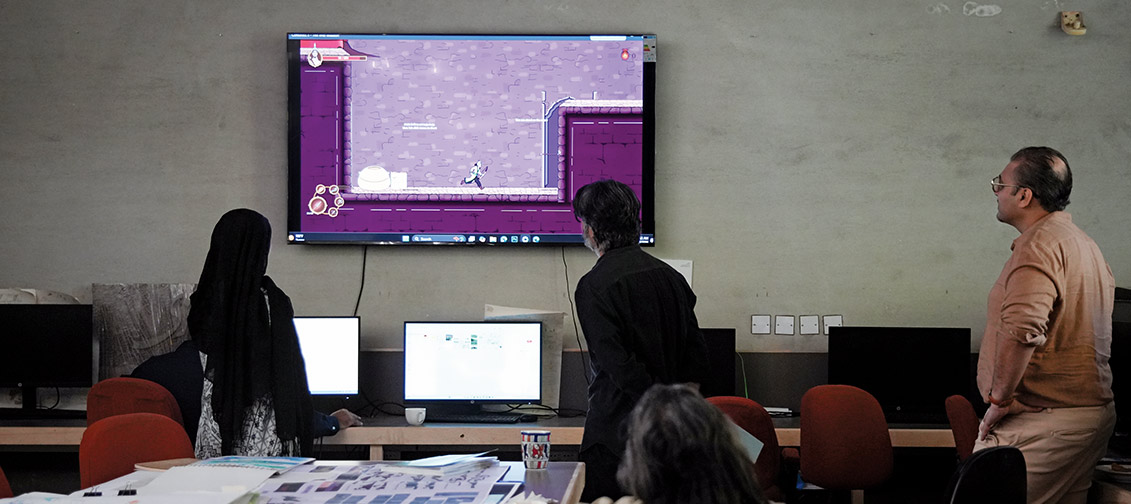
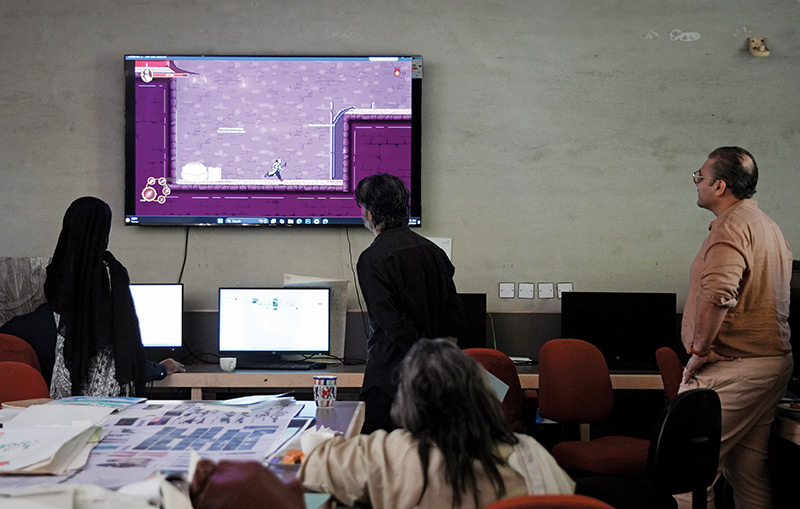
The Department of Multimedia Arts offers a Bachelor of Multimedia Art degree, specializing in Animation, Game Design, imaging Photography and Visualization and Simulation. With an interdisciplinary and collaborative approach, the program integrates traditional and modern art practices, exploring connections between Fine Art, Design, Film, and Art History. Multimedia, in all its forms, is an indispensable feature of the cinema, television, internet, gaming, and new media industries. The Multimedia program is designed to provide multidisciplinary knowledge for various professions associated with the digital world of today and tomorrow—where Fine Arts, Design, and Technology intersect to produce the next generation of innovative digital media creators. Graduates of this program will acquire creative, conceptual, and technical skills, enabling them to address problems creatively and ethically through applied research and a comprehensive understanding of theoretical, cultural, and philosophical paradigms.
The Department of Multimedia Arts uses contemporary tools, techniques, and methods, adopting a human-centered approach that incorporates creative and design thinking to present innovative solutions for current media spaces. The department provides a creative, liberal, and design-oriented environment, where students are encouraged to explore and work with technology to develop new and effective design solutions. To support this, the program provides instruction in artistically sophisticated 2D and 3D animation, game design, game engines, photography and extended reality (XR), with a focus on real-time applications that ensure communicative messages effectively reach their intended audiences.
The Multimedia Art program emphasizes storytelling, encouraging students to develop visual narratives inspired by their regional and broader Asian contexts, while meeting contemporary industry demands. The curriculum emphasizes indigenous themes across new media, including installations, multimodal spaces, interactive and immersive environments, audiovisual performances, video mapping, and virtual and augmented reality works. Our goal is to produce creative and technically proficient multimedia professionals, with a strong focus on market-oriented skills, entrepreneurship, and self-employment in the multimedia industry.
In the second year, Multimedia Art students are introduced to all major areas before choosing one to pursue in the 3rd and 4th year. During this foundational period, courses such as Studio Drawing and the Multimedia Seminar help students cultivate a personal and critically informed creative practice. The faculty of Multimedia Art, in accordance with the NCA vision, ensures students enroll in interdisciplinary courses from the 3rd semester that broaden their skills and creative approaches.
These are the specializations offered
ANIMATION
In the specialization Animation, students are provided with a strong foundation in both traditional and digital animation techniques grounded in artistic practice and technical skill. Students are encouraged to explore the core principles of animation, narrative, character design, and motion graphics through a hands-on studio-based curriculum focus on visual narratives inspired by their regional and broader Asian contexts. The programme promotes critical thinking and creative experimentation while preparing students for diverse careers across film, television, gaming, and digital media, shaping them into visual storytellers ready for the demands of the ever-evolving creative industry.
GAME DESIGN
In this specialization, students are offered a comprehensive guide and understanding of the fundamental principles of game design, focusing on board games, platform games and role playing games to develop practical skills in creating engaging and visually compelling games embedded in socio-cultural context. Students learn and explore game art, mechanics, level design, concept art, and interaction design within a narrative framework and game engine. Alongside, the programme goes beyond the classroom by regularly hosting guest lectures from seasoned industry professionals and visits to leading game studios exposing students to latest trends shaping the global game industry. This experiential learning fosters both artistic and technical growth enabling students to pursue impactful roles in games development, interactive design and emerging digital industry.
IMAGING AND PHOTOGRAPHY
In the specialization students learn and cultivate a deep understanding of photography as fine art practice as well as a powerful visual narrative medium. The programme involves exploration of analog and digital photography, within diverse domains of documentary, portraiture and experimental imaging using both real world and studio as creative spaces for practice. Students are provided with cutting edge tools and techniques to explore their individual artistic expressions developing both technical mastery and artistic voice shaping them into versatile visual storytellers across commercial, editorial, documentary and fine art photography industries. Emphasis is placed on lighting, composition, editing, and storytelling, alongside ethical representation and cultural sensitivity. Students are encouraged to experiment with diverse techniques using pin-hole camera, camera obscura to modern digital camera equipment to produce still and moving image, installation, and multimedia integration, shaping a distinct artistic voice while preparing them for contemporary professional and creative practices.
VISUALISATION AND SIMULATION
For the specialization in Visulization and Simulation, an interdisciplinary approach in Art, Design and Technology is used which infuses diverse disciplines into coherence. Students learn to design immersive and human-centered experiences across Augmented Reality, Virtual Reality, Extended or Mixed Reality. Their learning is grounded in studio based experience design, user journey and interaction systems using tools like Unreal Engine, headsets, tablets and UI/UX frameworks. The programme emphasizes on learning through multimedia approach, especially in spatial storytelling and interactive environments with a strong focus on virtual heritage, cultural spaces, museums and product based experiences. Students actively explore immersive media in historical and cultural contexts while developing strong, technical, conceptual and socially aware virtual experiences
New media and our digital culture have evolved, bringing with them new design challenges. The Department of Multimedia Art use contemporary tools, techniques, and methods, adopting a human-centered approach that incorporates creative and design thinking to present innovative solutions for current media spaces. The department provides a creative, liberal, and design-oriented environment where students are encouraged to explore and work with technology to develop new and effective design solutions. The program will provide knowledge in artistically sophisticated 2D and 3D animation, game design, and extended reality (XR), focusing on innovative real-time applications, ensuring that communicative messages effectively reach target audience. Our program emphasizes storytelling, encouraging students to create multilayered narratives inspired by their regional and broader Asian contexts. These narratives are designed to resonate with audiences across various platforms while addressing contemporary market demands.
We focus on indigenous themes across new media, including installations, multimodal spaces, interactive and immersive environments, audiovisual performances, video mapping, and virtual and augmented reality works. Our goal is to produce creative and technically proficient multimedia professionals, with an emphasis on marketoriented skills, entrepreneurship, and selfemployment in the multimedia industry.
| Code | Courses | Category | Type | Credits |
|---|---|---|---|---|
| FNDN-1101 | Drawing I | Foundation | Studio | 3 |
| FNDN-1102 | Spatial Intelligence I | Foundation | Studio | 3 |
| FNDN-1103 | Design and Moving Image I | Foundation | Studio | 3 |
| FNDN-1104 | Sculpture I | Foundation | Studio | 3 |
| COMP-1101 | Functional English | Compulsory | Theory | 3 |
| COMP-1102 | Ideology and constitution of Pakistan - Pakistan Studies | Compulsory | Theory | 2+2 |
| FNDN-1105 | History of Art I | Compulsory | Theory | 1 |
| COMP-1104 | Introduction to the Arts I | Compulsory | Theory | 1 |
| COMP-1105 | Civic and Community Engagement | Compulsory | Theory | 2 |
| Total | 23 |
| Code | Courses | Category | Type | Credits |
|---|---|---|---|---|
| FNDN-1201 | Drawing II | Foundation | Studio | 3 |
| FNDN-1202 | Spatial Intelligence II | Foundation | Studio | 3 |
| FNDN-1203 | Design and Moving Image II | Foundation | Studio | 3 |
| FNDN-1204 | Sculpture II | Foundation | Studio | 3 |
| COMP-1201 | Expository Writing | Compulsory | Theory | 3 |
| COMP-1202 | Islamic Studies - Fehm-ul-Quran | Compulsory | Theory | 2+2 |
| FNDN-1205 | History of Art II | Compulsory | Theory | 1 |
| COMP-1204 | Introduction to the Arts II | Compulsory | Theory | 1 |
| COMP-1205 | Entrepreneurship | Compulsory | Theory | 2 |
| COMP-1206 | Artificial Intelligence | Compulsory | Theory | 3 |
| Total | 26 |
| Code | Courses | Category | Type | Credits |
|---|---|---|---|---|
| MMA-2101 | Introduction to Multimedia Studio I (Animation I and Extended Reality) | Major | Studio | 4 |
| MMA-2102 | Multimedia Seminar I | Major | Theory | 2 |
| MMA-2103 | Drawing I | Major | Studio | 2 |
| NCA-2101 | History of Art I | Major | Theory | 2 |
| COMP-2101 | A Science of Society | Compulsory | Theory | 2 |
| COMP-2102 | Information Communication Technologies in Education | Compulsory | Theory | 3 |
| COMP-2103 | Exploring Quantitative Skills | Compulsory | Theory | 3 |
| Interdisciplinary | Interdisciplinary | 2 | ||
| Total | 20 |
| Code | Courses | Category | Type | Credits |
|---|---|---|---|---|
| MMA-2201 | Introduction to Multimedia Studio II (Animation II and Game Design ) | Major | Studio | 6 |
| MMA-2202 | Multimedia Seminar II | Major | Theory | 2 |
| MMA-2203 | Drawing II | Major | Studio | 2 |
| NCA-2201 | History of Art II | Major | Theory | 2 |
| COMP-2201 | What is Science/ The Science of Global Challenges | Compulsory | Theory | 3 |
| COMP-2202 | Tools for Quantitative Reasoning | Compulsory | Theory | 3 |
| Interdisciplinary | Interdisciplinary | 2 | ||
| Total | 20 |
| Code | Courses | Category | Type | Credits |
|---|---|---|---|---|
| MMA-3101 | Multimedia Studio (Animation I/Game Design I/Extended Reality I) | Major | Studio | 5 |
| MMA-3102 | Multimedia Production I | Major | Studio | 2 |
| MMA-3103 | Sound Design I | Major | Studio | 2 |
| MMA-3104 | Drawing III | Major | Studio | 2 |
| NCA-3101 | History of Art III | Major | Theory | 2 |
| Interdisciplinary | Interdisciplinary | 2 | ||
| Total | 15 |
| Code | Courses | Category | Type | Credits |
|---|---|---|---|---|
| MMA-3201 | Multimedia Studio (Animation II/Game Design II/ Extended Reality II) | Major | Studio | 5 |
| MMA-3202 | Multimedia Production II | Major | Studio | 2 |
| MMA-3203 | Sound Design II | Major | Studio | 1 |
| MMA-3204 | Drawing IV | Major | Studio | 2 |
| NCA-3201 | History of Art IV | Major | Theory | 2 |
| Interdisciplinary | Interdisciplinary | 2 | ||
| Internship | 3 | |||
| Total | 17 |
| Code | Courses | Category | Type | Credits |
|---|---|---|---|---|
| MMA-4101 | Multimedia Studio (Animation III/Game Design III/ Extended Reality III) | Major | Studio | 4 |
| MMA-4102 | Multimedia Production III | Major | Studio | 4 |
| MMA-4103 | Pitch and Presentation skills | Major | Studio | 3 |
| MMA-4104 | Drawing V | Major | Studio | 2 |
| MMA-4105 | Research Methodology | Major | Theory | 2 |
| Total | 15 |
Thesis 15 credits
CENTRE FOR FOUNDATION STUDIES FACULTY
Faran Faisal
Incharge Foundation Studies
Assistant Professor
Prof. Dr. Murtaza Jafri
Prof. Dr. Syeda Farida Batool
Prof. Shehnaz Malhi
Tausif Zain Ul Abedin
Muhammad Arshad Saeed
Saadia Amin Raja
Wasim Akhtar
Ali Baba
Ammara Khalid
Ali Zafar
Syed Muhammad Hassan Zaidi
Rizwana Irfan
Sumaira Ameen
Naveen Zehra
Mujahid Shoaib Butt
Nariman Aziz
Ateeq ur Rehman
Zohreen Murtaza
Ghazala Raees
The Department of Multimedia Arts offers a Bachelor of Multimedia Art degree, specializing in Animation, Game Design, imaging Photography and Visualization and Simulation. With an interdisciplinary and collaborative approach, the program integrates traditional and modern art practices, exploring connections between Fine Art, Design, Film, and Art History. Multimedia, in all its forms, is an indispensable feature of the cinema, television, internet, gaming, and new media industries. The Multimedia program is designed to provide multidisciplinary knowledge for various professions associated with the digital world of today and tomorrow—where Fine Arts, Design, and Technology intersect to produce the next generation of innovative digital media creators. Graduates of this program will acquire creative, conceptual, and technical skills, enabling them to address problems creatively and ethically through applied research and a comprehensive understanding of theoretical, cultural, and philosophical paradigms.
The Department of Multimedia Arts uses contemporary tools, techniques, and methods, adopting a human-centered approach that incorporates creative and design thinking to present innovative solutions for current media spaces. The department provides a creative, liberal, and design-oriented environment, where students are encouraged to explore and work with technology to develop new and effective design solutions. To support this, the program provides instruction in artistically sophisticated 2D and 3D animation, game design, game engines, photography and extended reality (XR), with a focus on real-time applications that ensure communicative messages effectively reach their intended audiences.
The Multimedia Art program emphasizes storytelling, encouraging students to develop visual narratives inspired by their regional and broader Asian contexts, while meeting contemporary industry demands. The curriculum emphasizes indigenous themes across new media, including installations, multimodal spaces, interactive and immersive environments, audiovisual performances, video mapping, and virtual and augmented reality works. Our goal is to produce creative and technically proficient multimedia professionals, with a strong focus on market-oriented skills, entrepreneurship, and self-employment in the multimedia industry.
In the second year, Multimedia Art students are introduced to all major areas before choosing one to pursue in the 3rd and 4th year. During this foundational period, courses such as Studio Drawing and the Multimedia Seminar help students cultivate a personal and critically informed creative practice. The faculty of Multimedia Art, in accordance with the NCA vision, ensures students enroll in interdisciplinary courses from the 3rd semester that broaden their skills and creative approaches.
These are the specializations offered
ANIMATION
In the specialization Animation, students are provided with a strong foundation in both traditional and digital animation techniques grounded in artistic practice and technical skill. Students are encouraged to explore the core principles of animation, narrative, character design, and motion graphics through a hands-on studio-based curriculum focus on visual narratives inspired by their regional and broader Asian contexts. The programme promotes critical thinking and creative experimentation while preparing students for diverse careers across film, television, gaming, and digital media, shaping them into visual storytellers ready for the demands of the ever-evolving creative industry.
GAME DESIGN
In this specialization, students are offered a comprehensive guide and understanding of the fundamental principles of game design, focusing on board games, platform games and role playing games to develop practical skills in creating engaging and visually compelling games embedded in socio-cultural context. Students learn and explore game art, mechanics, level design, concept art, and interaction design within a narrative framework and game engine. Alongside, the programme goes beyond the classroom by regularly hosting guest lectures from seasoned industry professionals and visits to leading game studios exposing students to latest trends shaping the global game industry. This experiential learning fosters both artistic and technical growth enabling students to pursue impactful roles in games development, interactive design and emerging digital industry.
IMAGING AND PHOTOGRAPHY
In the specialization students learn and cultivate a deep understanding of photography as fine art practice as well as a powerful visual narrative medium. The programme involves exploration of analog and digital photography, within diverse domains of documentary, portraiture and experimental imaging using both real world and studio as creative spaces for practice. Students are provided with cutting edge tools and techniques to explore their individual artistic expressions developing both technical mastery and artistic voice shaping them into versatile visual storytellers across commercial, editorial, documentary and fine art photography industries. Emphasis is placed on lighting, composition, editing, and storytelling, alongside ethical representation and cultural sensitivity. Students are encouraged to experiment with diverse techniques using pin-hole camera, camera obscura to modern digital camera equipment to produce still and moving image, installation, and multimedia integration, shaping a distinct artistic voice while preparing them for contemporary professional and creative practices.
VISUALISATION AND SIMULATION
For the specialization in Visulization and Simulation, an interdisciplinary approach in Art, Design and Technology is used which infuses diverse disciplines into coherence. Students learn to design immersive and human-centered experiences across Augmented Reality, Virtual Reality, Extended or Mixed Reality. Their learning is grounded in studio based experience design, user journey and interaction systems using tools like Unreal Engine, headsets, tablets and UI/UX frameworks. The programme emphasizes on learning through multimedia approach, especially in spatial storytelling and interactive environments with a strong focus on virtual heritage, cultural spaces, museums and product based experiences. Students actively explore immersive media in historical and cultural contexts while developing strong, technical, conceptual and socially aware virtual experiences
New media and our digital culture have evolved, bringing with them new design challenges. The Department of Multimedia Art use contemporary tools, techniques, and methods, adopting a human-centered approach that incorporates creative and design thinking to present innovative solutions for current media spaces. The department provides a creative, liberal, and design-oriented environment where students are encouraged to explore and work with technology to develop new and effective design solutions. The program will provide knowledge in artistically sophisticated 2D and 3D animation, game design, and extended reality (XR), focusing on innovative real-time applications, ensuring that communicative messages effectively reach target audience. Our program emphasizes storytelling, encouraging students to create multilayered narratives inspired by their regional and broader Asian contexts. These narratives are designed to resonate with audiences across various platforms while addressing contemporary market demands.
We focus on indigenous themes across new media, including installations, multimodal spaces, interactive and immersive environments, audiovisual performances, video mapping, and virtual and augmented reality works. Our goal is to produce creative and technically proficient multimedia professionals, with an emphasis on marketoriented skills, entrepreneurship, and selfemployment in the multimedia industry.
| Code | Courses | Category | Type | Credits |
|---|---|---|---|---|
| FNDN-1101 | Drawing I | Foundation | Studio | 3 |
| FNDN-1102 | Spatial Intelligence I | Foundation | Studio | 3 |
| FNDN-1103 | Design and Moving Image I | Foundation | Studio | 3 |
| FNDN-1104 | Sculpture I | Foundation | Studio | 3 |
| COMP-1101 | Functional English | Compulsory | Theory | 3 |
| COMP-1102 | Ideology and constitution of Pakistan - Pakistan Studies | Compulsory | Theory | 2+2 |
| FNDN-1105 | History of Art I | Compulsory | Theory | 1 |
| COMP-1104 | Introduction to the Arts I | Compulsory | Theory | 1 |
| COMP-1105 | Civic and Community Engagement | Compulsory | Theory | 2 |
| Total | 23 |
| Code | Courses | Category | Type | Credits |
|---|---|---|---|---|
| FNDN-1201 | Drawing II | Foundation | Studio | 3 |
| FNDN-1202 | Spatial Intelligence II | Foundation | Studio | 3 |
| FNDN-1203 | Design and Moving Image II | Foundation | Studio | 3 |
| FNDN-1204 | Sculpture II | Foundation | Studio | 3 |
| COMP-1201 | Expository Writing | Compulsory | Theory | 3 |
| COMP-1202 | Islamic Studies - Fehm-ul-Quran | Compulsory | Theory | 2+2 |
| FNDN-1205 | History of Art II | Compulsory | Theory | 1 |
| COMP-1204 | Introduction to the Arts II | Compulsory | Theory | 1 |
| COMP-1205 | Entrepreneurship | Compulsory | Theory | 2 |
| COMP-1206 | Artificial Intelligence | Compulsory | Theory | 3 |
| Total | 26 |
| Code | Courses | Category | Type | Credits |
|---|---|---|---|---|
| MMA-2101 | Introduction to Multimedia Studio I (Animation I and Extended Reality) | Major | Studio | 4 |
| MMA-2102 | Multimedia Seminar I | Major | Theory | 2 |
| MMA-2103 | Drawing I | Major | Studio | 2 |
| NCA-2101 | History of Art I | Major | Theory | 2 |
| COMP-2101 | A Science of Society | Compulsory | Theory | 2 |
| COMP-2102 | Information Communication Technologies in Education | Compulsory | Theory | 3 |
| COMP-2103 | Exploring Quantitative Skills | Compulsory | Theory | 3 |
| Interdisciplinary | Interdisciplinary | 2 | ||
| Total | 20 |
| Code | Courses | Category | Type | Credits |
|---|---|---|---|---|
| MMA-2201 | Introduction to Multimedia Studio II (Animation II and Game Design ) | Major | Studio | 6 |
| MMA-2202 | Multimedia Seminar II | Major | Theory | 2 |
| MMA-2203 | Drawing II | Major | Studio | 2 |
| NCA-2201 | History of Art II | Major | Theory | 2 |
| COMP-2201 | What is Science/ The Science of Global Challenges | Compulsory | Theory | 3 |
| COMP-2202 | Tools for Quantitative Reasoning | Compulsory | Theory | 3 |
| Interdisciplinary | Interdisciplinary | 2 | ||
| Total | 20 |
| Code | Courses | Category | Type | Credits |
|---|---|---|---|---|
| MMA-3101 | Multimedia Studio (Animation I/Game Design I/Extended Reality I) |
Major | Studio | 5 |
| MMA-3102 | Multimedia Production I | Major | Studio | 2 |
| MMA-3103 | Sound Design I | Major | Studio | 2 |
| MMA-3104 | Drawing III | Major | Studio | 2 |
| NCA-3101 | History of Art III | Major | Theory | 2 |
| Interdisciplinary | Interdisciplinary | 2 | ||
| Total | 15 |
| Code | Courses | Category | Type | Credits |
|---|---|---|---|---|
| MMA-3201 | Multimedia Studio (Animation II/Game Design II/ Extended Reality II) | Major | Studio | 5 |
| MMA-3202 | Multimedia Production II | Major | Studio | 2 |
| MMA-3203 | Sound Design II | Major | Studio | 1 |
| MMA-3204 | Drawing IV | Major | Studio | 2 |
| NCA-3201 | History of Art IV | Major | Theory | 2 |
| Interdisciplinary | Interdisciplinary | 2 | ||
| Internship | 3 | |||
| Total | 17 |
| Code | Courses | Category | Type | Credits |
|---|---|---|---|---|
| MMA-4101 | Multimedia Studio (Animation III/Game Design III/ Extended Reality III) | Major | Studio | 4 |
| MMA-4102 | Multimedia Production III | Major | Studio | 4 |
| MMA-4103 | Pitch and Presentation skills | Major | Studio | 3 |
| MMA-4104 | Drawing V | Major | Studio | 2 |
| MMA-4105 | Research Methodology | Major | Theory | 2 |
| Total | 15 |
Thesis 15 credits
CENTRE FOR FOUNDATION STUDIES FACULTY
Faran Faisal
Incharge Foundation Studies
Assistant Professor
Prof. Dr. Murtaza Jafri
Prof. Dr. Syeda Farida Batool
Prof. Shehnaz Malhi
Tausif Zain Ul Abedin
Muhammad Arshad Saeed
Saadia Amin Raja
Wasim Akhtar
Ali Baba
Ammara Khalid
Ali Zafar
Syed Muhammad Hassan Zaidi
Rizwana Irfan
Sumaira Ameen
Naveen Zehra
Mujahid Shoaib Butt
Nariman Aziz
Ateeq ur Rehman
Zohreen Murtaza
Ghazala Raees
© Copyrights - National College of Arts
Design: Baber Baig - Development: Qasim Naeem